

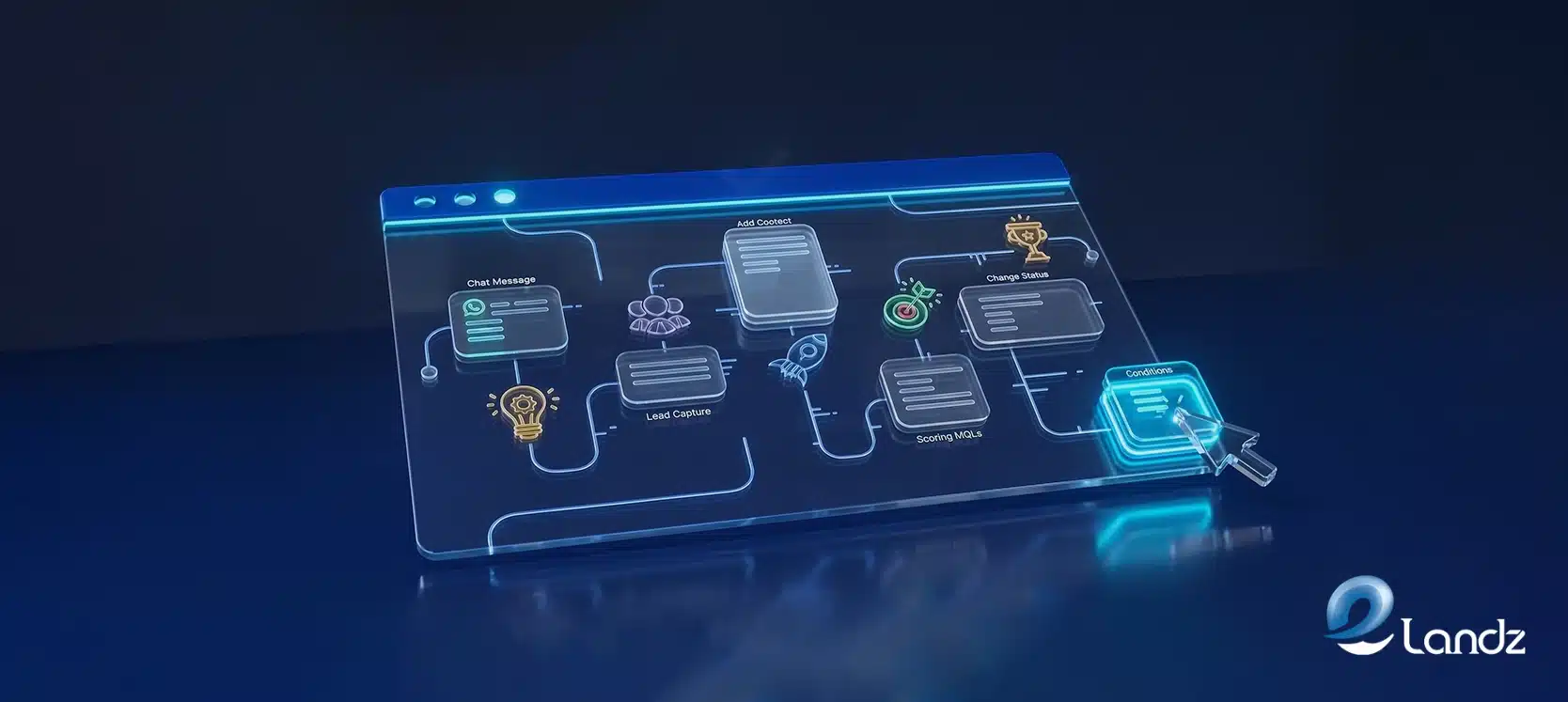
The Future of Workflow Automation: What Every Business Needs to Know
17 Apr 2026Every forward-thinking organization has one question on the table right now: how do we measure the impact of automation before competitors outpace us? The answer lies in understanding not just what automation does today, but where it is headed and how fast.
The future of workflow automation is no longer a distant forecast reserved for enterprise tech teams. It is unfolding inside marketing departments, HR portals, finance dashboards, and customer support queues across organizations of every size. By 2026, 30% of enterprises will automate more than half of their network activities, up from under 10% in mid-2023, according to Gartner. Those numbers make one thing clear: standing still is not a neutral position.
This article breaks down the forces shaping this transformation, the capabilities that matter most, and what businesses should do to stay ahead.
Why Traditional Automation Is No Longer Enough
Early automation was built on rigid logic and worked well for predictable, isolated processes. The moment a workflow hit an exception or required real judgment, the system broke down. Today’s businesses need something far more adaptive than that.
The Limits of Rule-Based Systems
A trigger fired, a rule applied, and a task completed. That model fell short the moment a workflow encountered an unstructured input or a decision requiring judgment. Rigid systems simply cannot keep pace with how modern businesses actually operate.
Why AI Changes Everything
Workflows now span multiple departments, dozens of tools, and thousands of data points generated every hour. AI reads context, detects patterns, anticipates outcomes, and adjusts in real time. The shift from rule-based to AI-driven automation is arguably the most significant operational change businesses will navigate this decade.
The Rise of Hyper-Automation
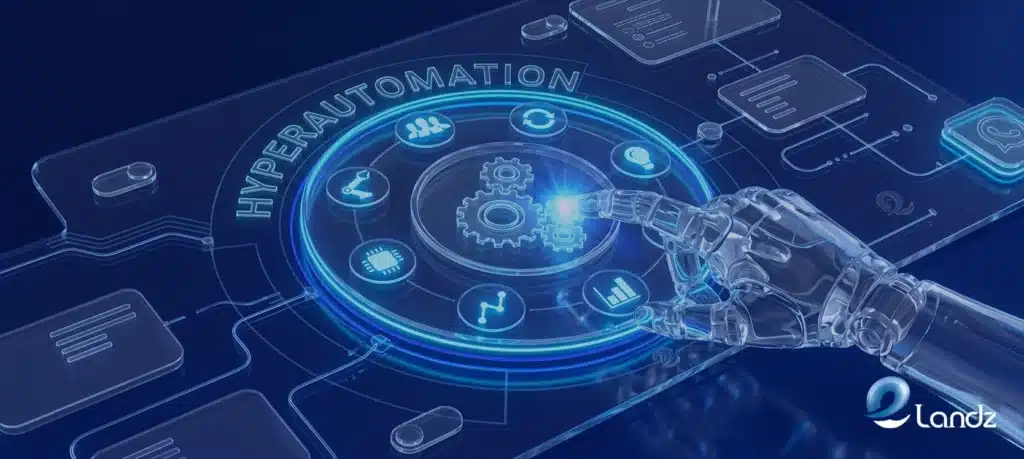
Hyper-automation combines RPA, machine learning, natural language processing, and AI to create end-to-end automated ecosystems. Rather than automating one task at a time, it connects entire processes from data capture to decision-making into a single intelligent flow. Gartner projects this market will exceed $1 trillion by 2026.
What Hyper-Automation Looks Like in Practice
Consider a finance team managing invoice approvals. Under hyper-automation, the system reads the invoice, cross-references it against purchase orders in the ERP, flags discrepancies, and routes the document to the right approver without a single human touch until final sign-off. Organizations still automating one task at a time are already falling behind.
Standard Operating Procedures Are Getting Smarter
SOPs (standard operating procedures) have historically lived in policy manuals, referenced occasionally and followed inconsistently. Today, leading platforms allow teams to encode SOPs directly into automated workflows that enforce consistency at every step. The procedure becomes the process, and the process becomes self-executing.
How SOPs Become Self-Executing Workflows
When a new employee submits an onboarding request, the system triggers account creation, sends welcome communications, assigns training modules, and notifies the manager, all without anyone consulting a checklist. Every step follows the SOP baked into the workflow logic. Inconsistency, one of the most expensive problems in operations, disappears at scale.
AI Makes Decisions, Not Just Recommendations
The future of workflow automation is one where AI handles routine operational decisions, not just analysis. Ticket routing, fraud flagging, inventory reordering, and resource scheduling no longer require a manager to weigh in on every instance. According to a 2025 Gartner report, 44% of respondents expect generative AI to automate repetitive tasks in operations workflows, directly reducing human effort.
From Reactive to Predictive
The most sophisticated systems anticipate problems before they happen. Retailers adjust inventory before stockouts occur, manufacturers schedule maintenance before equipment fails, and customer service teams resolve issues before complaints are filed. This proactive posture is one of the most commercially valuable capabilities the future of workflow automation will deliver.
No-Code Tools Democratize Automation
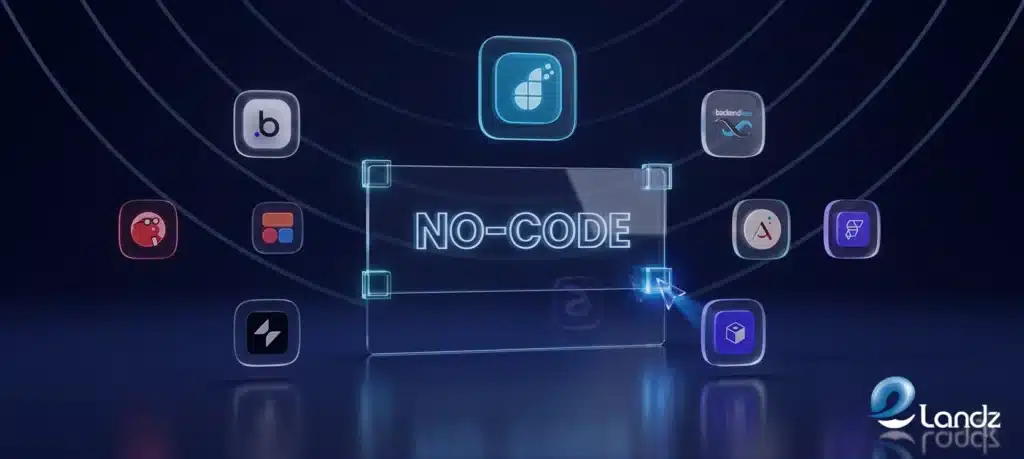
Building an automated workflow once required a developer and a two-week backlog. Today, a marketing manager can connect their CRM and email tool and deploy a lead nurturing sequence in an afternoon. No-code tools put workflow-building in the hands of the people who understand the process best.
The Platforms Leading This Movement
Platforms like n8n, Make, Kissflow, and FlowForma offer visual editors that support drag-and-drop simplicity alongside custom logic for teams that need more depth. According to recent coverage by TechRepublic (2025), the no-code automation market is set to grow significantly as companies empower non-technical teams without adding IT overhead. This accessibility accelerates adoption in a way that top-down tech rollouts rarely achieve.
Integration Is Now a Strategic Requirement
A CRM that cannot talk to the finance system, or a project management tool that does not sync with HR, creates invisible friction that erodes efficiency over time. Integration has moved from a technical feature to a strategic requirement, with 94% of executives wanting unified platforms that connect across CRM, ERP, email, and finance simultaneously. The future of workflow automation is fundamentally a story about connectivity.
Intelligent Document Processing Closes the Loop
Approximately 85% of business data is unstructured, covering invoices, emails, scanned contracts, and PDFs. Intelligent Document Processing uses AI to extract, classify, and route information from these formats automatically. Without it, even the most sophisticated automation hits a wall every time an unstructured document enters the process.
The Five Levels of Workflow Maturity
Most organizations operate between Levels 2 and 3 on the automation maturity spectrum, while the future of workflow automation sits at Levels 4 and 5. Understanding where you currently stand makes it easier to prioritize the right next investment. The path from rule-based automation to autonomous workflows is shorter than most leaders realize.
Breaking Down Each Level
Level 1 covers basic triggered tasks where humans handle everything after the initial action. Level 2 uses IF/THEN logic to route simple decisions automatically. Level 3 orchestrates multi-step workflows across systems with minimal handoffs, while Level 4 uses AI and historical data to make decisions dynamically. Level 5 represents fully autonomous workflows that detect issues, trigger resolutions, and update stakeholders without any human prompting.
Overcoming the Real Barriers to Adoption

The most common obstacles are not technical; they are organizational. Fear of job displacement, resistance from middle management, and weak change management do more damage to automation programs than any legacy system. Businesses that get this right invest as heavily in communicating the purpose of automation as they do in the platform itself.
Start Small, Scale With Confidence
Begin with one well-documented, high-volume process such as password resets, ticket routing, or invoice approvals. Map the current workflow first, remove redundancies, and then automate the optimized version. Measure the results clearly and use that data to build internal confidence for broader rollout.
What the Future of Workflow Automation Means for Your Team
Human work is not going away; it is being redirected toward strategy, creativity, and judgment. The future of workflow automation concentrates human energy on the work that actually requires people, while machines handle the rest with precision. The competitive gap between businesses that automate well and those that delay is already visible, and in two years it will be decisive.
Conclusion
Workflow automation has crossed a threshold. It is no longer about marginal efficiency gains; it is about redesigning how work flows through an organization entirely. AI, hyper-automation, no-code platforms, and intelligent document processing are converging into something far more powerful than any single tool.
The future of workflow automation belongs to businesses that treat it as a strategic capability, not an IT project. The question is not whether to automate. It is how well you will do it, and how soon.
Frequently Asked Questions
If you are exploring workflow automation for the first time or looking to scale what you already have, these answers cover what most business leaders want to know.
What is workflow automation?
How does AI improve workflow automation?
What is hyper-automation?
Can non-technical teams use no-code tools?
Where should a business start with automation?
Table Of Content