

Introduction
Every dollar saved in operations is a dollar you can redirect toward growth. But many businesses cut costs in ways that slow their teams down, frustrate customers, or damage output quality.
Strategy two is often the cheapest win. Our AI automation services automate repeat tasks with n8n workflows connected to HubSpot.
The truth is that smart cost management does not have to hurt productivity. This guide by Elandz walks you through exactly how to reduce operational costs while keeping your business running at full strength.
1. Map Your Spending Before You Cut Anything
You cannot cut what you cannot see. Pull together your financial statements and calculate your total operating costs. These fall into two main categories: Cost of Goods Sold (COGS), which covers raw materials, direct labor, and production overheads, and Operating Expenses (OPEX), which includes rent, salaries, utilities, software licenses, and marketing fees.
Some costs are fixed and stay constant regardless of business activity. Others are variable and shift with production volume or demand. Once you clearly map both, you can identify which expenses deliver genuine value and which ones quietly drain your resources. Conduct a spend analysis by reviewing all company expenditures over the past six months. Cancel any service your team has not used in 90 days. Small forgotten payments compound fast.
2. Automate Repetitive Tasks
One of the most effective ways to learn how to reduce operational costs is to examine where your employees spend most of their time. If your team fills out the same forms, manually pulls data from multiple systems, or sends repetitive follow-up messages every day, you are paying people to do work that software can handle.
AI-powered automation tools process documents faster, reduce human error, and allow your staff to focus on work that actually requires human judgment. Indiana State University used workflow automation to eliminate processing bottlenecks in its financial aid operations, introducing digital signatures and conditional fields without adding a single new hire. The improvements in efficiency also laid the groundwork for broader institutional expansion.
Start with one high-volume repetitive process. Automate it, measure the results, and scale from there.
3. Shift to Cloud-Based Infrastructure

On-premise servers require dedicated IT staff, regular hardware upgrades, backup systems, and physical office space. Cloud-based platforms remove most of these costs by transferring infrastructure responsibility to the provider.
Liberty Mutual Insurance shifted to a cloud-based content management system and saved $21 million over five years. The company moved nearly 300 million documents off physical storage, cut printing and paper costs dramatically, and improved retrieval times across its international teams. Decisions happened faster, and the IT burden dropped significantly.
Cloud solutions also scale with your business. You pay for what you use rather than provisioning hardware for peak demand that rarely arrives. This is precisely why cloud migration ranks among the top recommendations for any organization focused on how to reduce operational costs without sacrificing agility.
4. Tighten Up Your Supply Chain
For businesses that handle physical goods, the supply chain often hides significant waste. Procurement, storage, and logistics each carry costs that compound if nobody is actively managing them.
Review your inventory levels and ask whether you are holding more stock than you actually need. Excess inventory ties up capital, increases warehousing expenses, and creates risk when demand shifts unexpectedly. Match stock levels to real demand patterns rather than building padding into every scenario. On the procurement side, sustainable sourcing practices can reduce total costs by up to 10% while also strengthening your brand with consumers who care about environmental responsibility. Consolidating shipments and optimizing delivery routes add further savings without affecting service speed.
5. Negotiate Your Vendor Contracts
Most businesses accept their original vendor rates without ever pushing back. That is a straightforward missed opportunity. Your existing relationships carry real leverage, and most suppliers would rather offer a discount than lose a reliable long-term customer.
Before entering negotiations, research competitor pricing so you know what the market actually charges. Then approach your current vendor by acknowledging the relationship and presenting your cost challenge directly. Keep the tone collaborative rather than confrontational. Focus your energy on your highest monthly expenses first, since a 1% reduction on a large contract delivers far more savings than a 10% cut on a minor line item. Also ask about discounts for long-term subscriptions or early payment terms.
6. Use Freelancers for Non-Core Work

Full-time employees represent one of the largest ongoing costs for most businesses. Salaries, benefits, payroll taxes, office space, and equipment add up quickly. For roles that do not sit at the core of your daily operations, skilled freelancers and contractors offer a far more cost-effective alternative.
Tasks like graphic design, content creation, IT maintenance, customer support, and bookkeeping can all be outsourced to specialists. You pay only for the project, avoid long-term financial commitments, and gain access to expert-level work on demand. Many successful companies build their early teams this way, keeping a tight internal group focused on core operations while bringing in outside expertise for everything else.
7. Tackle Shadow IT Directly
Shadow IT happens when employees use unauthorized apps, personal cloud storage, or unlicensed software for work purposes. This usually signals that the tools your company provides are not meeting their needs, but the financial and security consequences are real.
Rogue subscriptions, unsecured personal accounts, and unlicensed tools inflate IT costs without appearing in any official budget line. They also create serious cybersecurity vulnerabilities. Conduct regular IT audits to find shadow usage and address the root cause, which is almost always outdated or inadequate tooling. Replacing legacy systems with modern alternatives removes the incentive for employees to work around official platforms.
8. Support Remote and Hybrid Work
Office space is a significant fixed cost. Rent, utilities, equipment maintenance, and office supplies all contribute to monthly overhead. Where roles allow it, remote or hybrid working reduces these expenses directly.
Employees who work from home also tend to report higher job satisfaction, which reduces staff turnover. Replacing an experienced employee typically costs more than retaining one when you account for recruitment, onboarding, and the productivity gap during transitions. Even shifting a handful of administrative roles to hybrid schedules can meaningfully reduce your physical infrastructure costs over time.
9. Invest in Employee Development
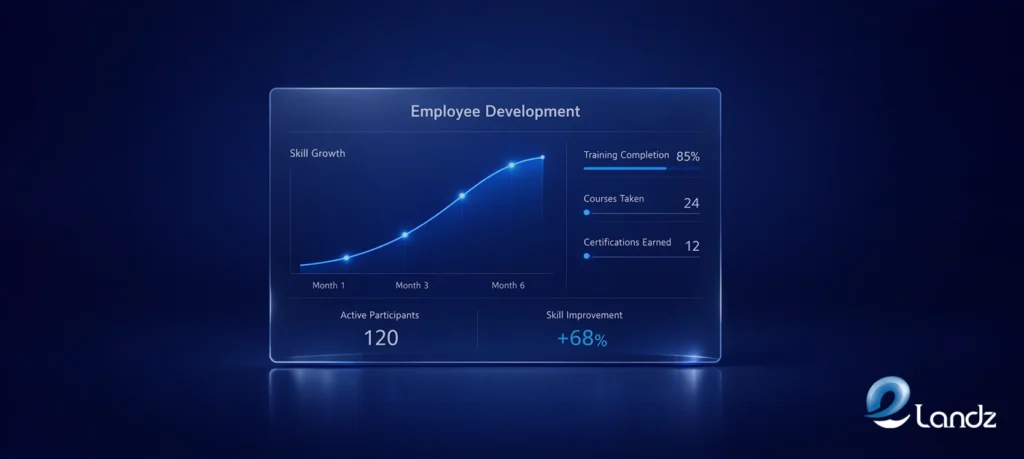
Cutting costs is only one side of the profitability equation. Getting more value from what you already spend is the other. Research from Gallup shows that high employee engagement leads to a 23% increase in profitability. Skilled, motivated employees work faster, make fewer errors, and deliver stronger results.
Regular training, honest recognition, and clear development opportunities keep your workforce sharp and loyal. Turnover is expensive. Building an environment where employees grow reduces the need for constant recruitment and protects the institutional knowledge your business depends on.
10. Build a Plan and Measure Everything
Understanding how to reduce operational costs only creates results when it leads to action. Build a clear cost reduction plan with specific targets, assigned ownership, defined timelines, and measurable outcomes. Vague intentions do not move numbers.
Track key performance indicators consistently so you can catch rising costs early. Review your cost reduction strategies at least once a quarter since markets shift and business needs change. Make cost awareness a standard part of how your organization operates rather than a reaction to a budget crisis. For a broader strategic framework on proactive cost management, the Harvard Business Review’s 2024 guide on cost reduction is a strong reference for leaders ready to act boldly.
Want to know which manual steps cost you the most? Start with a free lead flow audit, a 10 to 15 minute video review of how new business moves through your company. No call needed.
Conclusion
Reducing operational costs and sustaining productivity are not competing goals — they reinforce each other when approached with the right mindset. The businesses that do this well treat cost management as an ongoing discipline rather than a one-time fix. They invest in the right tools, negotiate confidently, staff strategically, and maintain a clear picture of where every dollar goes.
Start with a thorough spend analysis, identify your top two or three areas of opportunity, and act on them with a concrete plan. Every efficiency gain strengthens your foundation and creates financial room to pursue the growth you are working toward.
Frequently Asked Questions
Got questions about cutting costs without slowing your business down? These answers cover the most common concerns business owners and managers face when starting a cost reduction initiative.
Begin with a spend analysis to identify your biggest and most wasteful expenses, then target vendor contracts, unused subscriptions, and manual processes first. Quick wins in these areas free up capital for longer-term investments in automation and infrastructure.
Yes — many automation platforms operate on low-cost monthly subscriptions that scale with your usage. Even basic workflow automation can save several hours of manual work each week, delivering strong returns without large upfront investment.
Remote and hybrid work directly reduces rent, utilities, and equipment expenses, and it typically boosts employee satisfaction, which lowers costly turnover over time. The savings scale with how much of your team’s work can be done outside the office.
Conduct a full spend analysis every six months and review key cost areas at least once per quarter. Regular monitoring helps you catch unnecessary expenses early and keeps your cost reduction strategies aligned with how your business is actually changing.
The most common mistake is cutting across the board without distinguishing between costs that create value and those that do not. Reducing investment in people, technology, or quality almost always costs more in the long run than it saves.
Get updates in your inbox
Subscribe to our emails to receive newsletters, product updates, and marketing communications.