

What Is Cycle Time in Operations Management?
25 Mar 2026Introduction
Operations managers live and die by time. Every minute a process runs longer than it should costs money, delays customers, and strains resources. That is why understanding “what is cycle time in operations management” matters so much. It is one of the most direct ways to measure how fast a process actually runs and where it needs to improve.
This article explains cycle time in plain terms: what it means, how you calculate it, why it matters, and how to reduce it. Whether you run a factory floor or manage a service team, this metric belongs in your toolkit.
Defining Cycle Time
Cycle time is the total amount of time it takes to complete one unit of work from start to finish. It covers every step in the process, including active work, waiting, inspections, and handoffs. Nothing is left out.
In a manufacturing plant, it measures how long it takes to produce one product. In a service business, it tracks how long it takes to fulfill one customer request. In software development, it captures how long a task takes from when work starts to when it ships.
The common thread is this: cycle time tracks actual process speed. It does not track how fast you want things to go. It measures how fast they actually go.
What Is Cycle Time in Operations Management: The Core Idea
What is cycle time in operations management specifically? It is the metric that tells you how efficiently your process converts inputs into outputs. Operations management focuses on designing, running, and improving workflows. Cycle time sits at the center of that work.
When cycle time is short, your process moves fast. Output is high. Waste is low. When cycle time is long, something is slowing you down. It could be a bottleneck, a delay, or an inefficient step. Identifying that slowdown and fixing it is what operations management is about.
Operations teams use cycle time to set realistic production targets, allocate staff, plan capacity, and forecast delivery times. It is both a diagnostic tool and a planning tool.
How to Calculate Cycle Time
The formula is simple:
Cycle Time = Net Production Time ÷ Units Produced
Net production time is how long the process ran, not counting planned downtime like shift changes or scheduled maintenance. Units produced is the total output in that time.
Example: A team works 480 minutes in a shift and completes 120 orders. Cycle time = 480 ÷ 120 = 4 minutes per order. That is how long each unit takes on average.
For multi-step processes, you calculate the cycle time for each step separately. The step with the longest cycle time is your bottleneck. The overall process moves no faster than its slowest step.
You can also measure and track cycle time for individual units rather than relying on averages. This reveals variation. Some units might finish in 3 minutes while others take 7. Understanding that spread helps you find the root causes of delays.
Cycle Time vs. Lead Time

These two terms often get confused. They are related but different.
Cycle time measures how long it takes to process one unit once work begins. Lead time measures the total time from when an order is placed to when the customer receives it. Lead time includes cycle time, but it also includes queue time, procurement, shipping, and any other delays that happen before or after active processing.
Think of it this way: you walk into a coffee shop and order a latte. The lead time is how long from your order to when you hold the cup. The cycle time is how long the barista spent actually making your drink.
Both metrics matter. But cycle time tells you what is happening inside your process. Lead time tells you what your customer experiences.
Why Cycle Time Matters in Operations
Tracking cycle time gives operations managers useful data in several areas:
• Productivity: Shorter cycle times mean more units completed in the same time. Output goes up without adding headcount or equipment.
• Cost control: Longer cycles mean more labor hours and overhead per unit. Reducing cycle time brings down per-unit cost.
• Customer delivery: Faster processing leads to faster fulfillment. Customers get what they ordered sooner.
• Process improvement: Analyzing cycle time highlights where slowdowns occur. That makes it easier to know where to focus improvement efforts.• Capacity planning: Knowing your cycle time helps you predict how much you can produce in a given period and whether you can meet demand
Cycle Time and Takt Time
Takt time is the rate at which you need to produce one unit to keep up with customer demand. It is calculated by dividing available production time by the number of units customers want.
The relationship between cycle time and takt time is direct. If your cycle time is shorter than takt time, you are producing faster than demand. If your cycle time exceeds takt time, you cannot keep up with orders.
Operations managers aim to align cycle time with takt time. That balance prevents overproduction and avoids backlogs.
Cycle Time in Lean and Agile Operations

Lean manufacturing treats cycle time as a central metric. The goal of lean is to eliminate waste, meaning anything that consumes time or resources without adding value. Long cycle times usually signal waste somewhere in the process.
Lean tools like value stream mapping help teams see the full process and identify where time is lost. Kanban systems use cycle time data to set replenishment quantities and limit work in progress. SMED (Single Minute Exchange of Dies) targets changeover times to reduce cycle time between production runs.
Agile project teams in software development also rely on cycle time. In Scrum or Kanban frameworks, tracking how long tasks take from start to done helps teams plan sprints, set realistic expectations, and improve over time.
In both lean manufacturing and agile delivery, the practice is the same: measure cycle time, find what slows it down, remove that obstacle, and measure again.
How to Reduce Cycle Time
Once you understand ‘what is cycle time in operations management,’ the next step is reducing it. Here are practical approaches:
• Eliminate unnecessary steps: Review every activity in the process. Remove steps that do not add value for the customer.
• Fix bottlenecks first: The slowest step determines overall speed. Focus improvement efforts there before anywhere else.
• Reduce variation: Inconsistent cycle times are often caused by unclear methods, equipment problems, or material issues. Standardize work to create predictability.
• Automate repetitive tasks: Machines and software handle repetitive steps faster and more consistently than manual work.
• Organize the workspace: Apply 5S principles to reduce wasted movement and make tools and materials easier to access.• Limit work in progress: Too many tasks running at once create switching costs and delays. Capping WIP keeps work flowing.
Tracking and Reporting Cycle Time
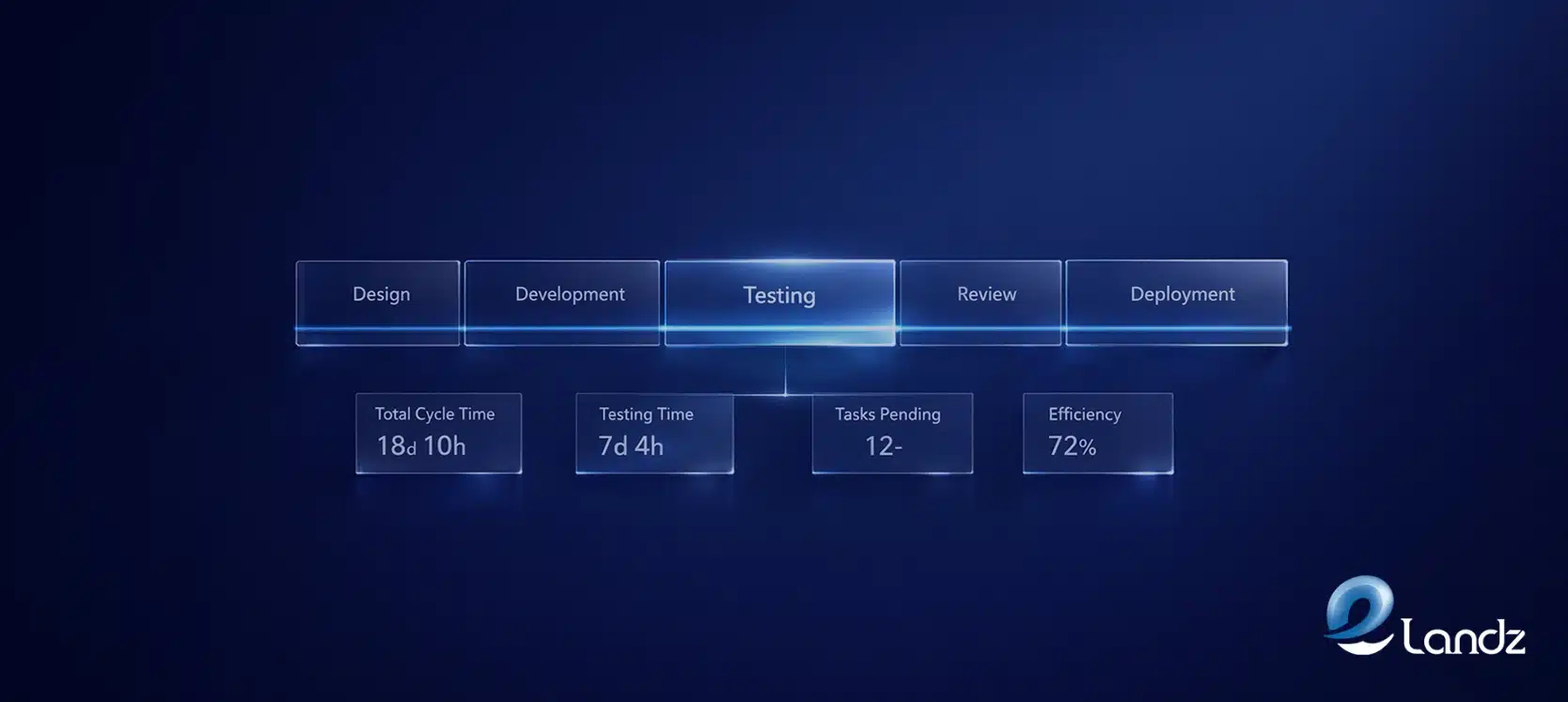
You cannot improve what you do not measure. Tracking cycle time consistently is what makes improvement possible. Many operations teams use dedicated software to capture start and end times automatically, reducing human error and making data available in real time.
Dashboards that display cycle time trends help managers spot problems early. If cycle times are creeping up, the dashboard shows it before it becomes a bigger issue. Teams can then investigate and act quickly.
Benchmarking is also useful. Comparing your cycle times against internal targets, past performance, or industry standards reveals how much room there is to improve. For a detailed overview of how organizations apply these metrics in practice, the
For further reading on how to apply these metrics in practice, see the Lean Enterprise Institute’s overview of lean principles, which covers continuous improvement, waste reduction, and cycle time optimization in depth.
Conclusion
Understanding ‘what is cycle time in operations management’ is the first step toward building a faster, leaner, and more responsive operation. It is not a complex concept. It simply asks: how long does one unit of work actually take? The answer to that question reveals a great deal about your process.
Short cycle times indicate efficiency. Long ones signal waste, bottlenecks, or variation that needs attention. By consistently tracking and working to reduce cycle time, operations managers create real improvements in cost, speed, and customer satisfaction.
Make it a habit to measure cycle time at every stage of your process. Find the slowest step. Fix it. Then repeat. That cycle of continuous improvement is what separates high-performing operations from the rest.
Frequently Asked Questions
Check it out!
What is the cycle time formula?
Why is cycle time important?
What causes cycle time to increase?
How can you reduce cycle time?
Is cycle time used in project management?
Table Of Content